News5th December 2025
Since 2014, participation in arts courses has dropped by 57 percent. Take-up of A-Level Art has fallen from 5.6 percent in 2010 to 4.9 percent in 2024, and vacancies for Art teachers have reached their highest level in over a decade.
Against this backdrop, how can schools ensure that students who want to study Art at GCSE and A-Level feel supported and confident in their choice?
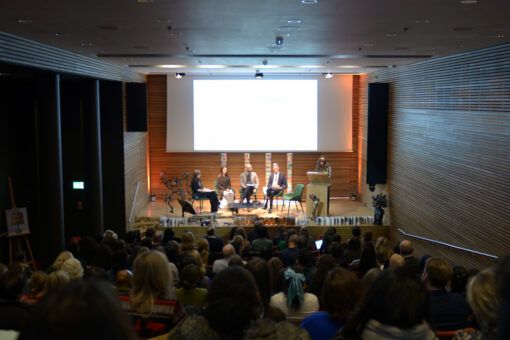
To try to answer this question, Ark brought together 150 Art teachers, educators, MAT leads and young artists, along with representatives from exam boards, trade unions and Ofsted at the National Portrait Gallery in central London.
The ‘Time in Art’ event was convened by Nitya Paul, Head of Art and Design at Ark Burlington Danes Academy, who highlighted the growing pressure on students.
She said, “Teachers, parents and young people have told us that students are worried about the time it will take them to get a good exam grade in Art, and that the subject will not help their future careers.
“Unlike most exam subjects, Art is assessed primarily through coursework – the volume of which is largely unspecified. The expectation of quantity without guidance and the uncertainty around standards is taking its toll.
“Also, for many young people, particularly those from low-income families, choosing Art is seen as a risk. The pressure to opt for “safer” subjects like Science, Maths and Psychology – with more predictable outcomes – is immense.”
A panel of speakers including Professor of Veterinary Science at the University of Liverpool Dr Paul Lunn, Ofsted Inspector Adam Vincent, STEM student Suri Paul and GCSE Art students all shared their perspectives on the future of Art education and possible solutions to its decline.
Some called for more formal guidelines on the number of pieces required for submission to exam boards, while others asked for better exemplification of what standard of work would receive which grade.
The attendees reflected on the issues raised in small working groups and began shaping recommendations to ensure that creative subjects remain accessible and valued.
Those innovative suggestions will now be compiled into a series of recommendations by Ark and published in the new year to continue the discussion on how we can future-proof Art education and inspire more students to embrace their creativity.
-
News20th March 2026
RISE webinar series: practical guidance for Year 6 SATs preparation
-
Opinion3rd March 2026
How to make mainstream education more inclusive
-
News24th February 2026
Ark Start plans to grow in West Yorkshire